If you’ve started searching for a BLS certification course in San Jose, chances are your employer just told you it’s required, or you’re starting clinical rotations and need proof of training before your first shift. Either way, the clock is usually ticking. Hospitals, nursing programs, and dental offices in Santa Clara County don’t leave much wiggle room on this one — no current BLS card, no start date.
The good news is that San Jose has more training options than most people realize. Some are better fits for healthcare workers, some are built for the general public, and a few are honestly just faster and more convenient than others. Below is a real look at the five places people in San Jose typically turn to when they need a BLS Certification Course in San Jose, CA, along with what sets each one apart.
Quick Facts: What to Look For in a BLS Course
| Feature | What You Want |
| Certifying Body | American Heart Association (AHA) |
| Card Delivery | Same-day, in hand or eCard |
| Format | Blended online + hands-on skills test |
| Validity | 2 years |
| Hospital Acceptance | Confirmed with major local hospitals |
| Renewal Options | Available before and after expiration |
Keep this table in mind as you compare options — a cheap class that isn’t AHA-recognized can cost you more time later if your hospital’s HR department rejects the card.
1. Hospital-Based Training Departments
Several San Jose hospitals run their own internal BLS classes, primarily for staff and sometimes for affiliated students. Kaiser Permanente San Jose, Santa Clara Valley Medical Center, and Good Samaritan Hospital all have education departments that offer periodic sessions.
The upside is convenience if you already work there. The downside: these classes are usually scheduled far in advance, seats fill up with staff first, and outside students often can’t enroll at all. If you need a card before clinicals start next week, this route rarely moves fast enough.
2. Community College Health Programs
Local community colleges sometimes bundle BLS or Heartsaver CPR into nursing and allied health prerequisite coursework. It’s a reasonable option if you’re already enrolled and the class lines up with your semester schedule.
The catch is flexibility — or the lack of it. These courses run on an academic calendar, not a “you need this by Friday” calendar. If your certification lapses mid-semester or your clinical rotation gets moved up, you’ll likely need a private training center to fill the gap quickly.
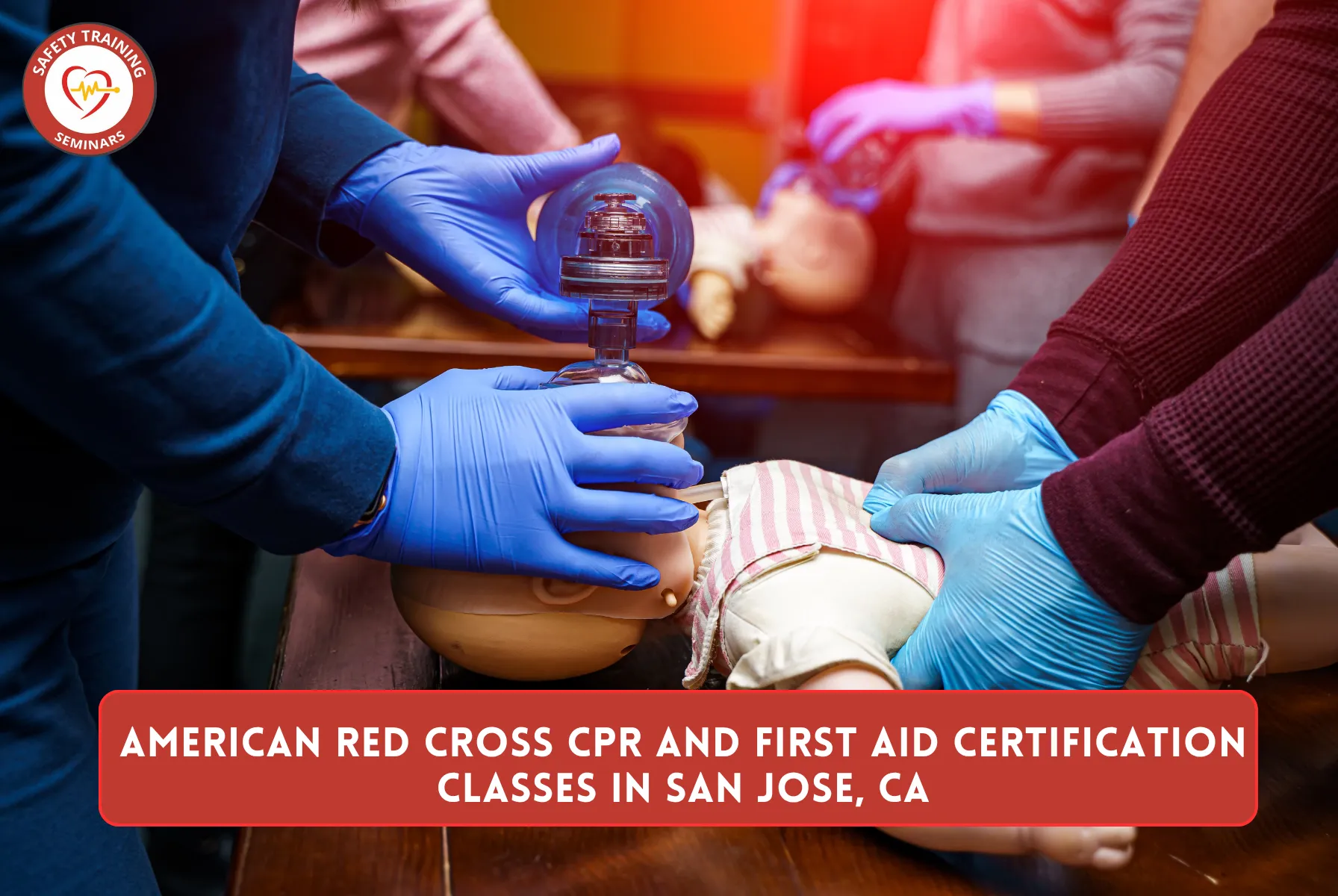
3. American Red Cross Chapters
The Red Cross is a well-known name, and their CPR and First Aid courses are solid for childcare workers, teachers, and general public certification. However, it’s worth double-checking your requirements before booking — some hospitals and EMS programs specifically require AHA BLS Provider certification, not Red Cross CPR, since the AHA card is the industry standard most healthcare employers ask for by name.
If you’re unsure which one your program requires, it’s worth a quick call to your school or HR department before you pay for the wrong course.
4. Fire Department Community Classes
A handful of local fire stations occasionally offer public CPR awareness classes as a community service. These are great for parents, coaches, or anyone wanting basic lifesaving knowledge. But they’re typically not designed for healthcare licensing purposes, don’t always include a full skills exam, and schedules can be unpredictable since they depend on staff availability.
5. Private CPR and BLS Training Centers (Our Recommendation)
This is where most working nurses, EMTs, dental assistants, and nursing students in San Jose actually end up — and for good reason. Private training centers like Safety Training Seminars specialize in nothing but resuscitation and safety certification, which means the schedule bends around your life instead of the other way around.
At our San Jose training center, located at 1268 Lincoln Ave, Ste 213, right off Lincoln Avenue near the Willow Glen neighborhood, students can complete a full BLS Certification Course with same-day card issuance. The location sits within easy reach of Good Samaritan Hospital and O’Connor Hospital, which makes it a practical stop for hospital staff squeezing in a class between shifts.
Picture this: a second-year nursing student at a local college gets an email on a Tuesday saying clinical rotations start Monday — and BLS certification is due before then. A hospital training department’s next opening is three weeks out. A private center with same-day skills testing and blended online modules is often the only realistic option that fits that timeline.
Students coming from Diridon Station or commuting along Highway 87 also find the location workable before or after work, and free parking removes one more hassle from an already busy week.
Who Should Take a BLS Certification Course?
BLS isn’t just for hospital employees. Locally, we regularly certify:
- Nurses and nursing students preparing for clinical placement
- EMTs and paramedics maintaining active licensure
- Medical and dental assistants meeting employer requirements
- CNAs and home health aides working with vulnerable patients
- Respiratory therapists who need current resuscitation skills
- Teachers and childcare staff wanting workplace-required or optional certification
- Coaches and personal trainers working around cardiac risk
Each group has slightly different reasons for certifying, but the AHA BLS card covers the requirement for nearly all of them.
What Actually Happens During a BLS Class
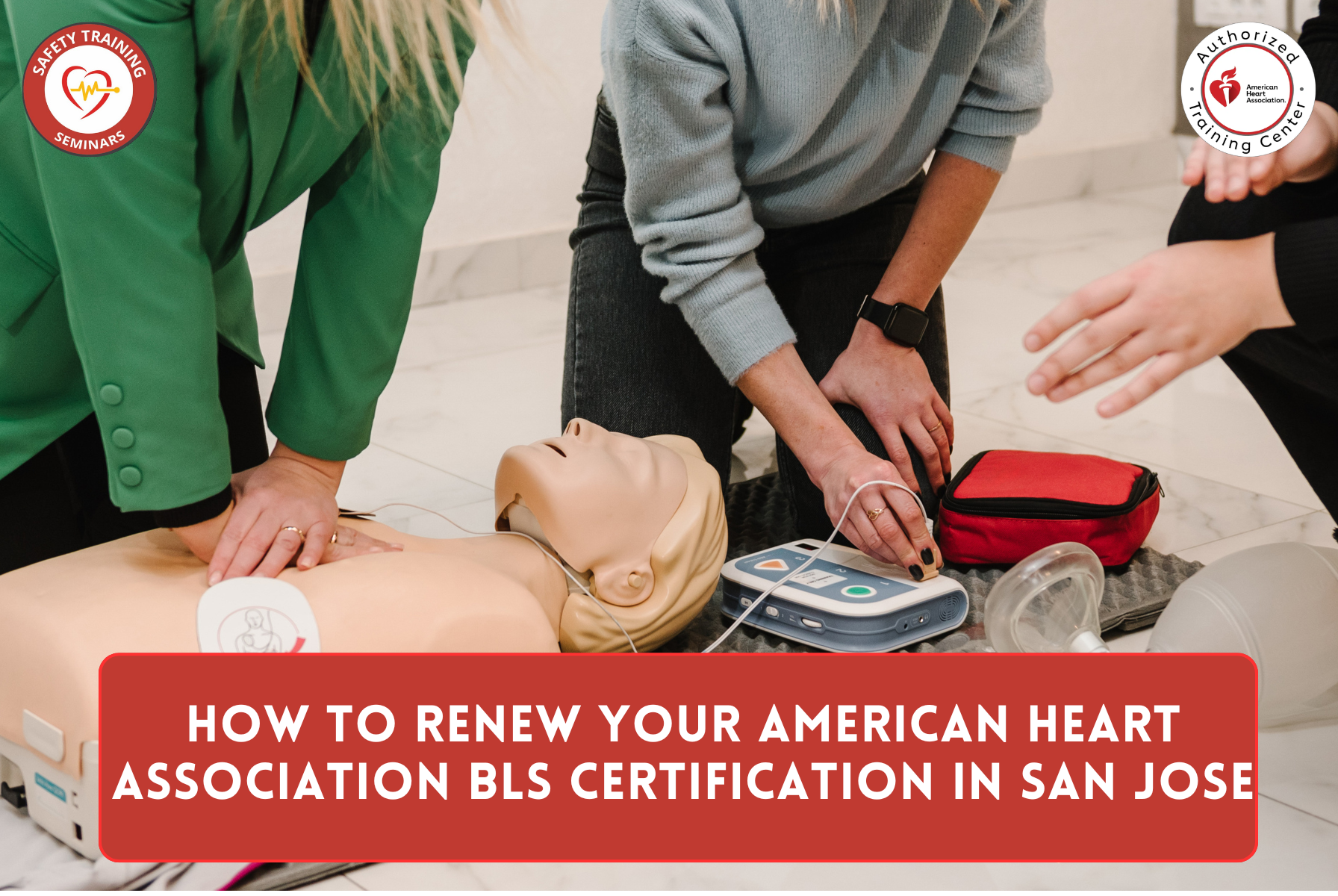
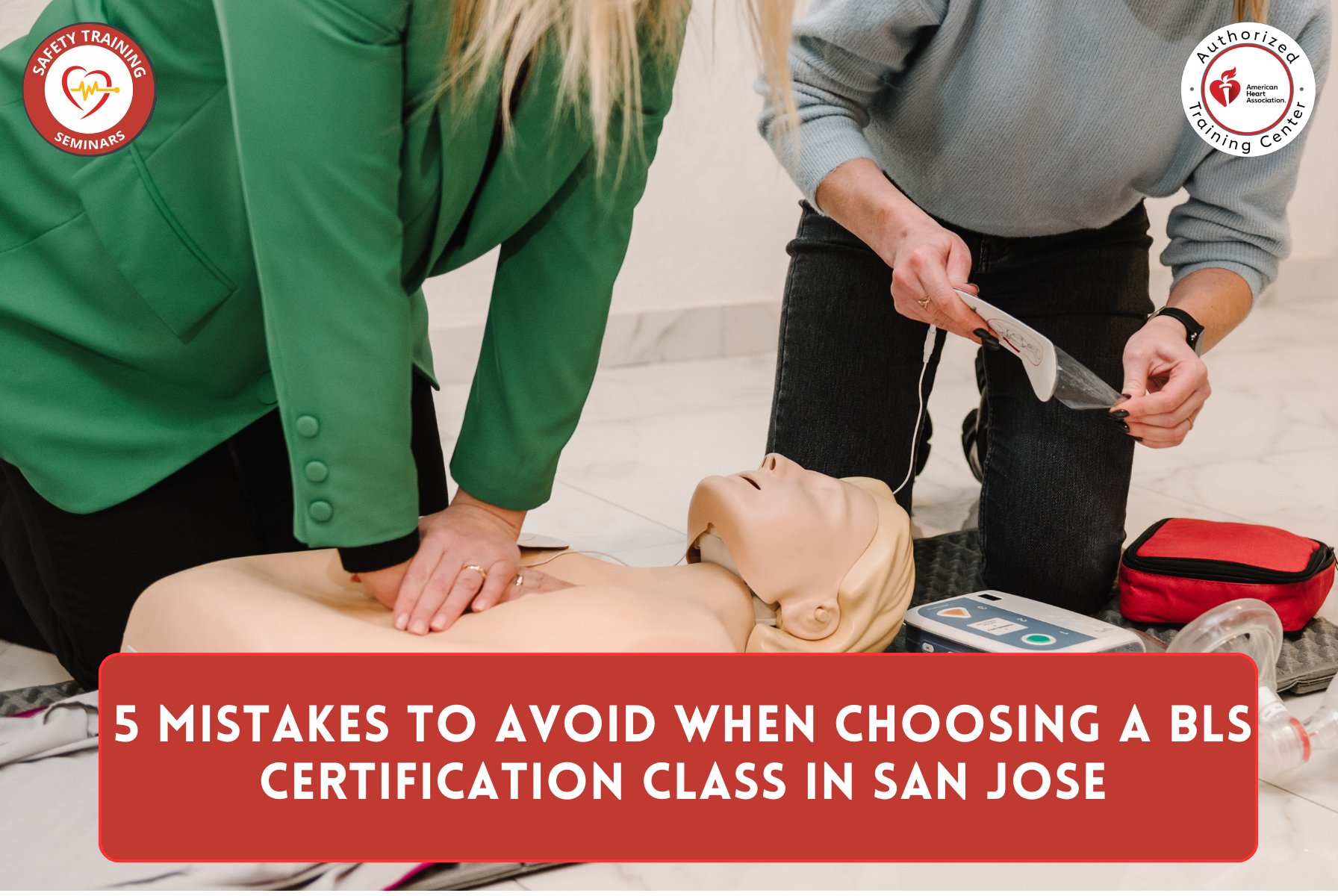
A typical CPR BLS class in San Jose blends online coursework with in-person skills testing. Students complete video-based instruction covering adult, child, and infant CPR, then come in for hands-on practice and testing. Expect to work through:
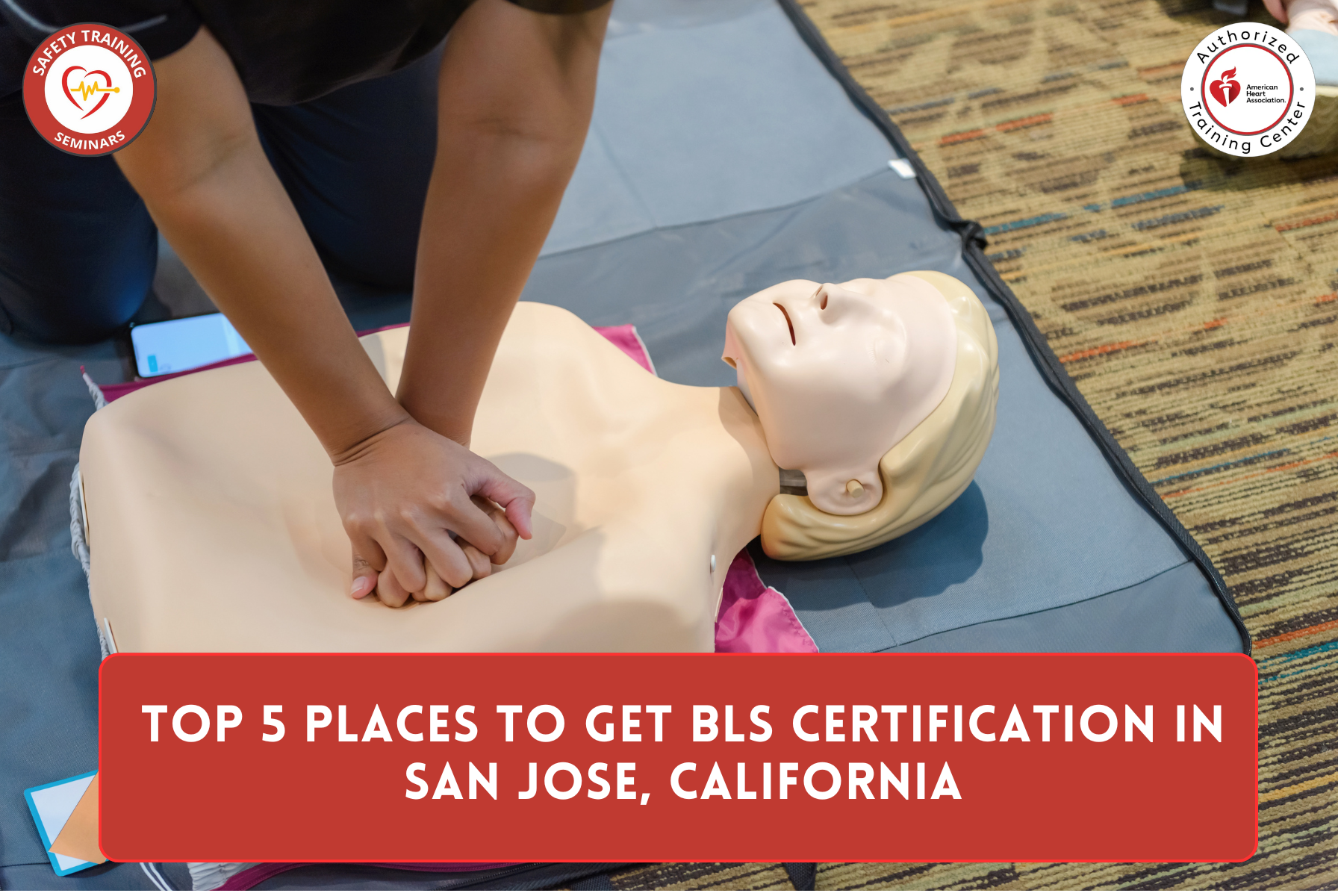
- Chest compression technique on feedback manikins
- AED setup and use
- Rescue breathing and bag-mask ventilation
- Choking response for different age groups
- Single-rescuer and team-based CPR scenarios
- A final skills evaluation before your card is issued
According to the American Heart Association, high-quality CPR with minimal interruptions in compressions significantly improves survival outcomes in cardiac arrest — which is exactly why the hands-on portion of the class matters as much as the online module.
Beyond BLS: Related Courses You May Need
Depending on your role, BLS might not be the only certification on your list. Many San Jose healthcare workers also need:
- ACLS Certification for staff involved in advanced cardiac emergencies
- PALS Certification for those working with pediatric patients
- CPR & First Aid Certification for general workplace or childcare requirements
If you’re outside the immediate area, Safety Training Seminars also runs a training location at 1953 Taraval St, Sacramento, CA 94116, offering the same CPR, BLS, ACLS, PALS, NRP, and First Aid course lineup for residents further north.
Frequently Asked Questions
Is the BLS card accepted by San Jose hospitals? Yes. AHA BLS Provider cards issued through our program are recognized by Kaiser Permanente San Jose, Santa Clara Valley Medical Center, O’Connor Hospital, Good Samaritan Hospital, and other regional facilities.
How long does the class actually take? Most students finish the online portion in 1–2 hours, then complete a 30-minute in-person skills test.
Can I get certified the same day I sign up? In most cases, yes. If you complete the online modules ahead of time, same-day skills testing and card issuance is available.
Do nursing students need BLS before clinical rotations start? Almost always. Check your program’s specific requirement, but BLS Provider certification is the standard prerequisite for clinical placement at most nursing schools.
How long is BLS certification valid? Two years from your completion date, after which renewal is required.
What if my BLS card already expired? No penalty — you can still renew through the standard course and skills test, even after expiration.
Is there a difference between BLS and regular CPR certification? Yes. BLS is designed specifically for healthcare providers and includes more advanced team-response scenarios, while general CPR certification is geared toward the public.
Do you offer classes on weekends? Yes, along with weekday morning and evening sessions to fit around work and school schedules.
Ready to Get Certified?
Between hospital waitlists, academic calendars, and organizations that don’t quite match what your employer requires, finding the right BLS course in San Jose can feel more complicated than it should be. A private training center solves most of that friction — same-day cards, flexible scheduling, and a course built specifically around AHA standards that hospitals actually recognize.
If your clinical rotation, job start date, or renewal deadline is coming up fast, contact our San Jose team to check upcoming class times, or call (408) 217-5490 to get scheduled this week.