A BLS course is more than a requirement to complete before starting a new job, clinical rotation, or certification renewal. It prepares you to recognize cardiac arrest, perform high-quality CPR, use an automated external defibrillator, support breathing, and work effectively with other rescuers.
For healthcare professionals and students in Silicon Valley, completing a CPR and First-aid Certification Course or BLS program on time can affect employment, school enrollment, and access to clinical training.
Safety Training Seminars offers local American Heart Association training in San Jose for students and professionals who need an efficient, skills-based course. Before registering, it helps to understand what happens during the online portion, what you will practice in person, and how you receive your certification.
BLS Course Quick Facts
| Feature | What to Expect |
| Certification provider | American Heart Association |
| Course format | Online learning followed by an in-person skills session |
| Online portion | Approximately 1–2 hours |
| Skills testing | Approximately 30 minutes |
| Main topics | Adult, child, and infant CPR, AED use, choking, ventilation, and team response |
| Certification card | Same-day AHA certification after successful completion |
| Card validity | Two years |
| San Jose location | 1261 Lincoln Ave, Suite 213, San Jose, CA 95125 |
| Scheduling | Classes available throughout the week |
| Parking | Free parking is available |
Students should review the current American Heart Association BLS Certification options on Sanjosecprcertification.com before selecting a class date.
What Happens Before the In-Person Session?
The BLS Certification Course in San Jose, CA uses a blended learning format. Students complete an online educational module before attending the CPR training center for hands-on practice and skills testing.
The online section introduces the essential steps of Basic Life Support, including:
- Recognizing cardiac arrest
- Checking responsiveness and breathing
- Activating emergency medical services
- Performing high-quality chest compressions
- Using an AED
- Giving rescue breaths
- Responding to choking
- Working as part of a resuscitation team
Most students complete the online portion at home, at work, or from another location with internet access. Complete all required modules before your scheduled skills appointment and save the completion document if one is provided.
Avoid rushing through the lessons just to reach the final screen. Understanding compression depth, hand placement, ventilation timing, and AED procedures will make the hands-on session easier.
What to Expect During Your Hands-On BLS Class
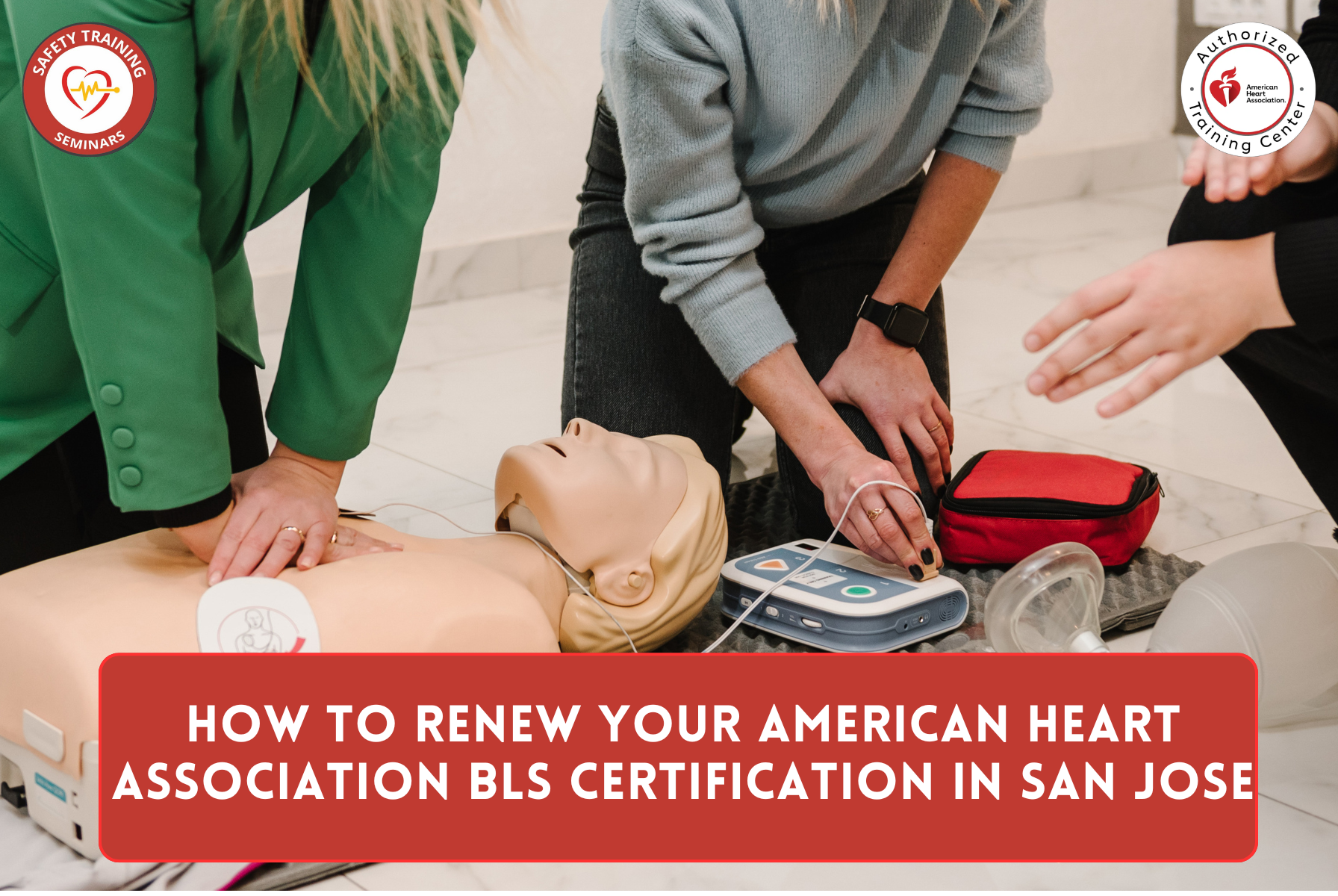
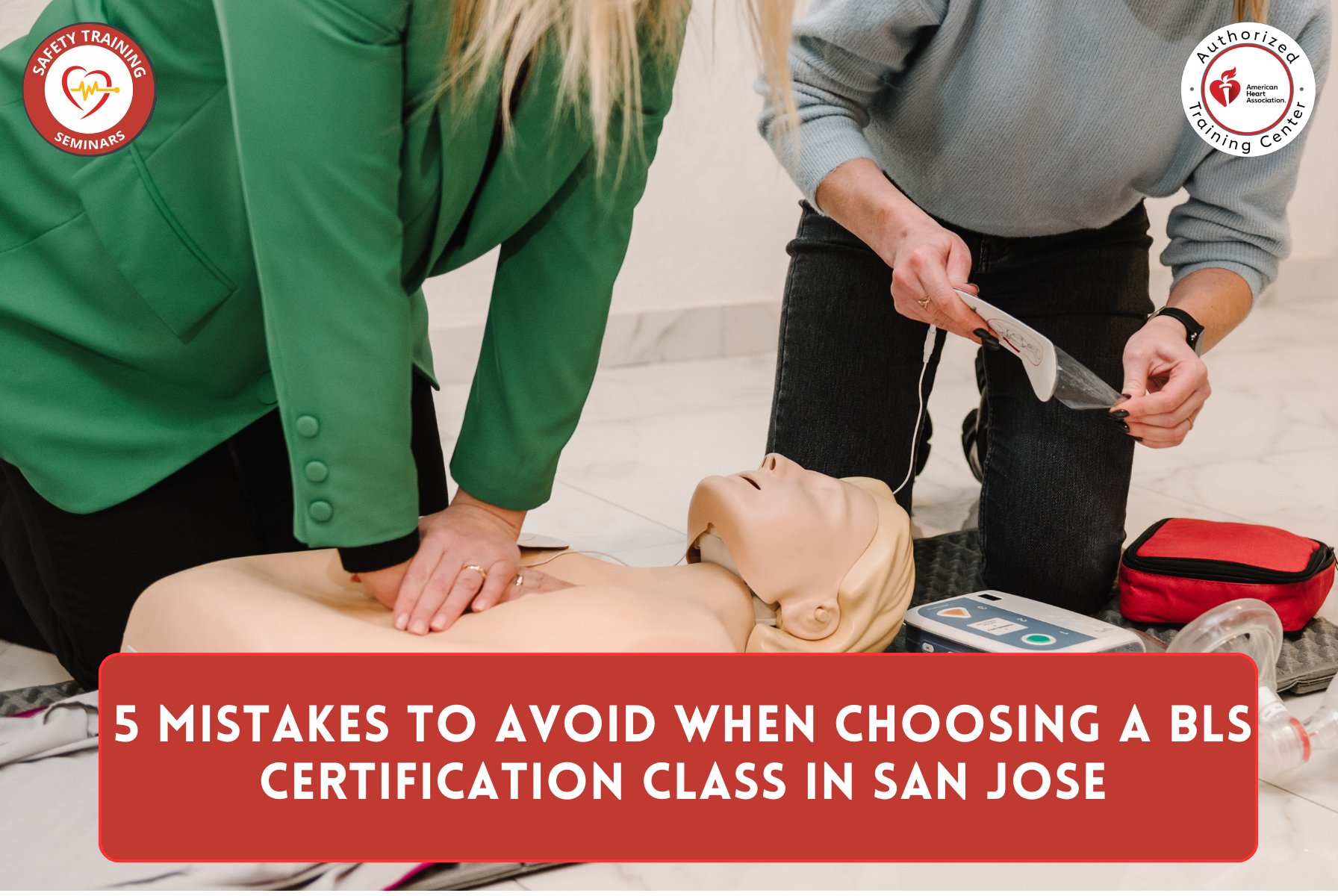
During an AHA BLS CPR Certification Class in San Jose, CA, you will work with CPR manikins and training AED equipment. This is an active class, not a lecture where students sit and watch an instructor for several hours.
You can expect to practice:
- Checking a person for responsiveness
- Identifying abnormal or absent breathing
- Performing adult CPR
- Performing child CPR
- Performing infant CPR
- Using an AED safely
- Providing rescue breaths
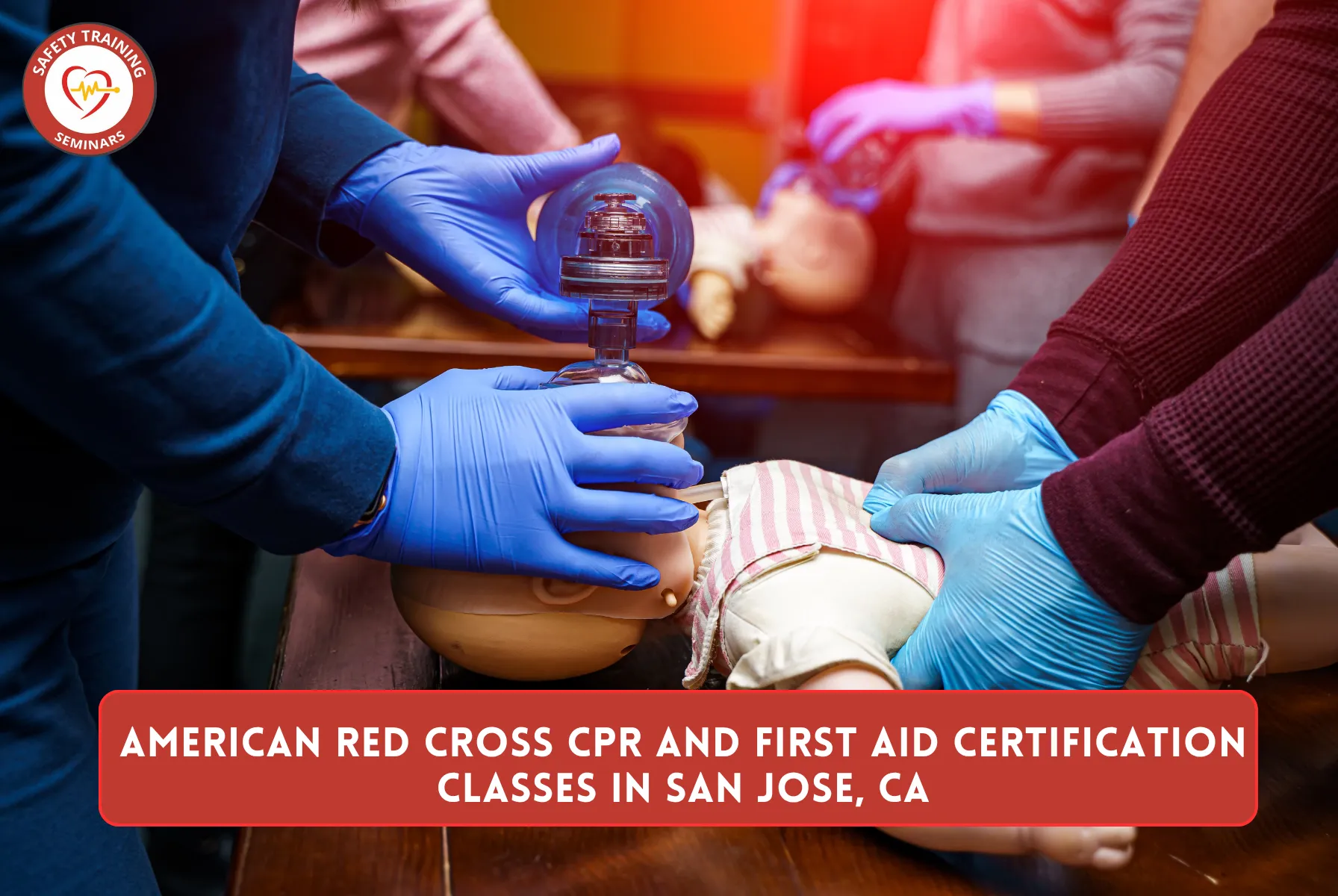
- Using a bag-mask device when appropriate
- Responding to choking
- Switching rescuers without creating long interruptions
- Communicating during team CPR
An instructor or skills evaluator will observe your performance and provide corrections when needed. Small details can make a significant difference in CPR quality.
For example, bent elbows may reduce compression depth. Incorrect hand position can make compressions less effective. Long pauses between compressions and AED use can also reduce the quality of the response.
The goal is not to make students nervous. The evaluator wants to confirm that you can follow the correct steps and perform the skills safely.
Why Hands-On CPR Practice Matters
Reading about CPR is not the same as performing it.
Chest compressions require correct hand placement, steady rhythm, proper depth, and full chest recoil. Students also need to learn how to manage fatigue and communicate with another rescuer.
Imagine a medical assistant working at a clinic near Willow Glen when a patient suddenly becomes unresponsive. One staff member calls 911, another retrieves the AED, and the medical assistant begins compressions.
Without practice, the team may hesitate or give conflicting instructions. BLS training helps each person understand their role and act more confidently.
The American Heart Association reports that immediate CPR can double or triple a cardiac arrest victim’s chance of survival. This is one reason the course emphasizes early recognition, effective compressions, AED use, and minimal interruptions.
How BLS Differs from a General CPR and First Aid Course
BLS and general CPR courses cover some of the same emergency skills, but they are not interchangeable for every workplace.
BLS is mainly intended for healthcare professionals, first responders, and students preparing for clinical roles. It places additional emphasis on:
- Healthcare-provider CPR techniques
- Two-rescuer CPR
- Team dynamics
- Bag-mask ventilation
- Adult, child, and infant emergencies
- Coordinated AED response
- High-quality chest compressions
A general CPR & First Aid Class in San Jose, CA may be more appropriate for teachers, childcare providers, coaches, office employees, security teams, or community members.
First Aid training also covers emergencies that may not involve cardiac arrest, including bleeding, burns, fractures, allergic reactions, seizures, and shock.
Before enrolling, check the exact wording of your employer, school, licensing organization, or clinical program requirement. A workplace asking for an American Heart Association BLS Provider card may not accept a basic community CPR certificate.
Who Should Take a BLS Certification Course?
Nurses and Nursing Students
Nurses may need BLS certification to begin employment or maintain hospital credentials. Nursing students often need a current card before entering clinical rotations.
Students attending San José State University, San Jose City College, or another local healthcare program should confirm their certification requirements before orientation.
EMTs and First Responders
Emergency medical technicians and other first responders may need to begin CPR, use an AED, manage an airway, and communicate with a response team in demanding situations.
Medical Assistants
Medical assistants work directly with patients in clinics, urgent care centers, and medical offices. BLS training prepares them to respond if a patient experiences cardiac arrest or another life-threatening emergency.
Dentists and Dental Hygienists
Medical emergencies can occur during dental appointments. Dental professionals may need to respond to breathing problems, cardiac events, or medication-related complications before emergency services arrive.
Respiratory Therapists
Respiratory therapists play an important role in airway support and ventilation. BLS certification reinforces the coordinated steps used during a resuscitation response.
Pharmacists
Pharmacists frequently interact with patients and may administer vaccinations or provide clinical services. Some employers require BLS or CPR training based on workplace responsibilities.
Teachers and Childcare Providers
Some schools and childcare organizations require general CPR and First Aid rather than healthcare-provider BLS. However, certain employers may specifically request BLS.
Coaches and Personal Trainers
Coaches and fitness professionals work in environments where physical exertion may increase the risk of a medical emergency. They should confirm whether their organization requires BLS or a general CPR & First Aid Course in San Jose, CA.
Security Staff
Security officers may be among the first people to arrive during an emergency at a business, shopping area, event venue, or residential property. CPR and AED skills help them provide support while waiting for paramedics.
A Convenient CPR Training Center in San Jose
The San Jose training location is in the Willow Glen area, along Lincoln Avenue. Willow Glen is convenient for people commuting from downtown San Jose, Campbell, Santa Clara, Los Gatos, and nearby neighborhoods.
Drivers may reach the area using Interstate 280, Highway 87, Willow Street, Curtner Avenue, or Meridian Avenue. Students traveling from downtown San Jose, SAP Center, or Diridon Station should allow enough time for the local connection into Willow Glen.
The location is also practical for healthcare professionals traveling from:
- Santa Clara Valley Medical Center
- O’Connor Hospital
- Good Samaritan Hospital
- Private medical practices
- Dental offices
- Senior care facilities
- Outpatient clinics
- Rehabilitation centers
Healthcare professionals working long shifts often prefer a CPR training center in San Jose, CA that offers flexible class availability and does not require a long drive outside the city.
Free parking can also make the class easier for students arriving directly before or after work.
How to Prepare for Your Skills Appointment
A little preparation can make the class experience more comfortable.
Before leaving home:
- Complete every required online module.
- Confirm the date and time of your appointment.
- Verify the training center address.
- Bring your online completion document if required.
- Review the certification requested by your employer.
- Wear comfortable clothing.
- Arrive early enough to park and locate the classroom.
- Inform the instructor about any physical limitation.
CPR practice involves kneeling, bending, and performing repeated chest compressions. Clothing that allows easy movement is usually the best choice.
During the assessment, listen closely to feedback. If the evaluator asks you to adjust your hand position, compression speed, or ventilation technique, make the correction and continue.
What Happens After You Complete the Course?
After completing the learning requirements and demonstrating the required skills, successful students receive their American Heart Association certification card.
Safety Training Seminars offers same-day certification for eligible courses after successful completion. Keep the electronic card email and save a copy where you can find it later.
Your employer, school, or clinical program may ask for the card number, issue date, expiration date, or a digital copy.
AHA BLS certification is generally valid for two years. Set a renewal reminder several weeks before expiration. Waiting until the final days can create problems if your preferred schedule is already full.
Safety Training Seminars also provides local course options for:
- CPR
- First Aid
- BLS
- ACLS
- PALS
- NRP
Healthcare professionals working in emergency medicine, intensive care, cardiovascular care, or advanced clinical roles may also need an ACLS Certification course in San Jose, CA.
Professionals who work with infants and children may need PALS Certification training in San Jose, CA. Always confirm the exact certification required for your role.
A Local BLS Scenario
Consider a nursing student preparing to begin clinical rotations at a San Jose hospital.
The student has completed classroom assignments and medical clearance, but the program requires a current AHA BLS Provider card before the first clinical day. Waiting until the final week could put the rotation at risk.
By completing the online module early and scheduling the hands-on session in Willow Glen, the student can receive the required certification without losing an entire day.
This is why early registration matters. BLS certification is often tied to employment, school deadlines, onboarding, or professional credentialing.
Frequently Asked Questions
Is the San Jose BLS course completely online?
No. The listed BLS format includes online education followed by an in-person skills session. A course without hands-on skills testing may not meet an employer’s AHA BLS requirement.
How long should I allow for the course?
The online portion generally takes approximately one to two hours. The in-person skills appointment may take about 30 minutes, although the exact time can vary.
Will I practice CPR on adults, children, and infants?
Yes. BLS training covers age-appropriate CPR techniques for adults, children, and infants. It also includes AED use, choking response, ventilation, and team rescue skills.
Can nursing students take the class?
Yes. Nursing students and students entering other healthcare programs commonly take BLS before starting clinical rotations. Check your school’s requirements before registering.
Is American Heart Association BLS accepted by hospitals?
AHA BLS certification is widely requested by hospitals and healthcare employers. However, every employer sets its own credentialing requirements, so confirm the required provider before enrolling.
Will I receive my certification on the same day?
Safety Training Seminars advertises same-day certification after successful completion of the required course components and skills testing.
Can I renew my certification before it expires?
Yes. Renewing early can prevent a lapse in certification and gives you more flexibility when selecting a class date.
What should I wear to the skills session?
Wear comfortable clothing that allows you to kneel, bend, and perform chest compressions. Avoid clothing that restricts movement.
Complete Your CPR and First-aid Certification Course in San Jose
A quality BLS course should leave you prepared to respond, not simply able to answer questions from an online lesson. The combination of online learning, hands-on skills practice, flexible scheduling, local accessibility, and same-day certification makes the San Jose location a practical choice for healthcare workers and students.
Review your employer or school requirements, choose a suitable class time, and complete your CPR and First-aid Certification Course before your current card expires.
Safety Training Seminars provide CPR, BLS, ACLS, PALS, NRP, and First Aid course options for San Jose professionals and students. Visit Sanjosecprcertification.com to review the current training schedule and register for a class.